






What Is a Byzantine Cross?
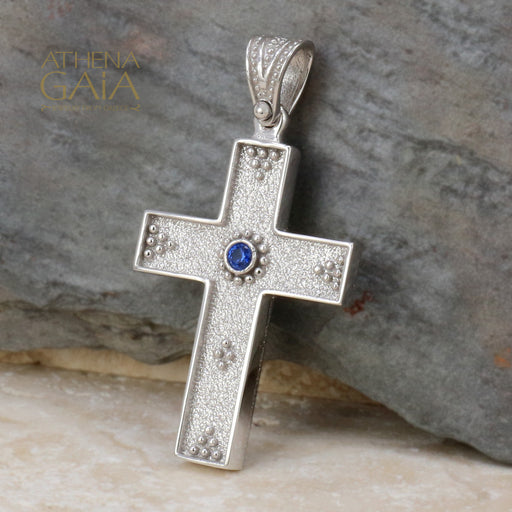
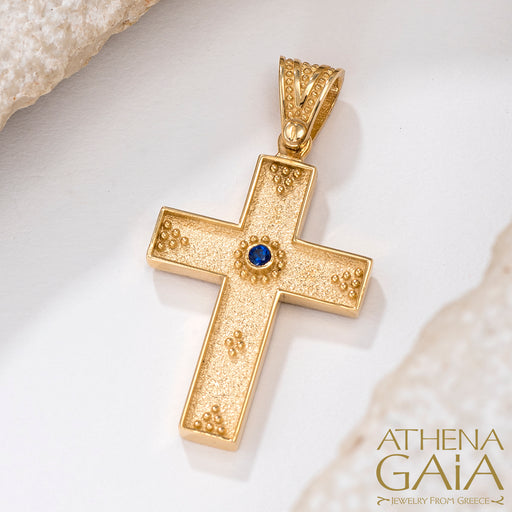
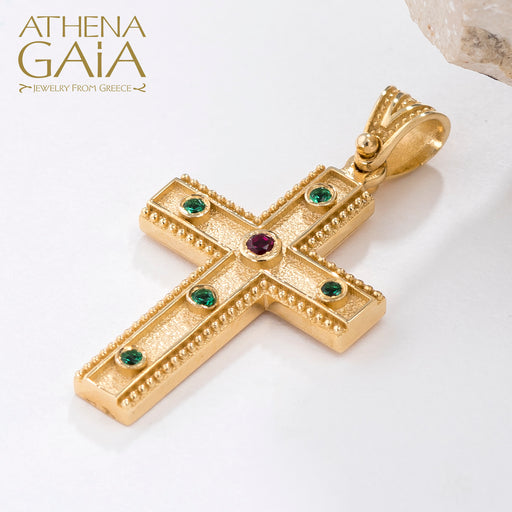
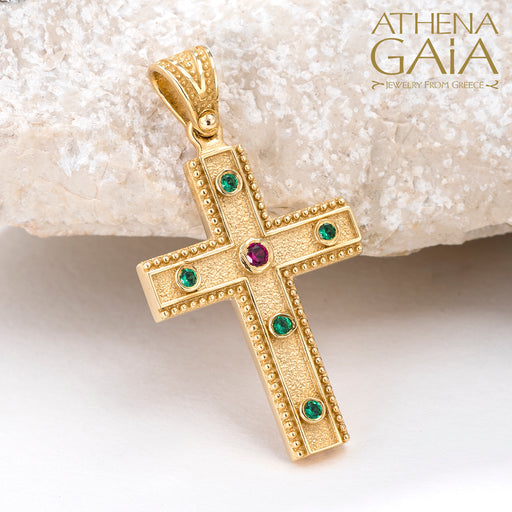
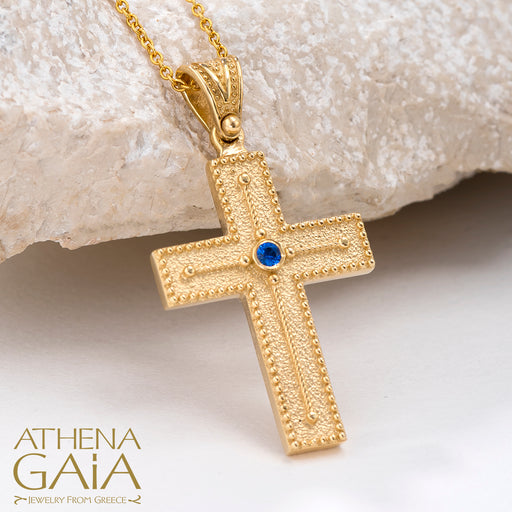
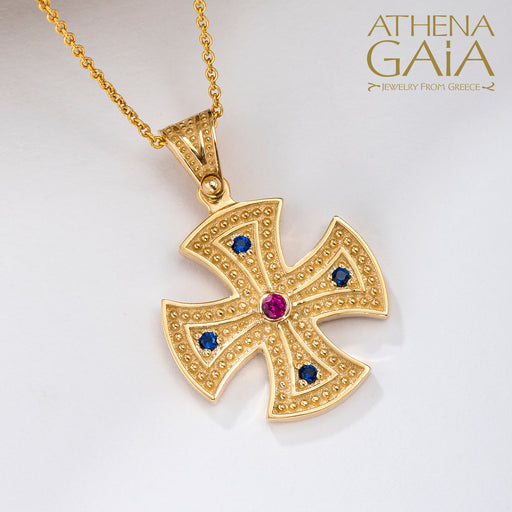
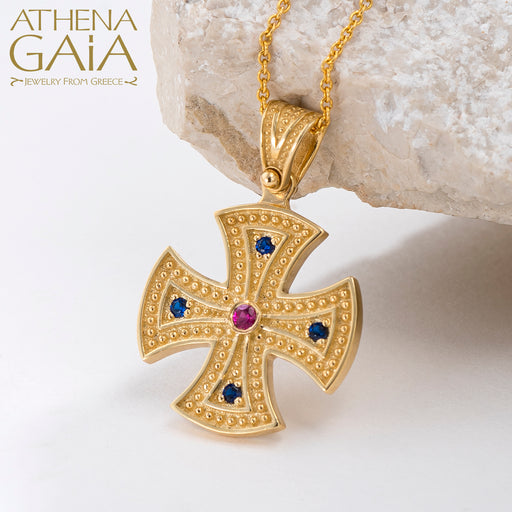
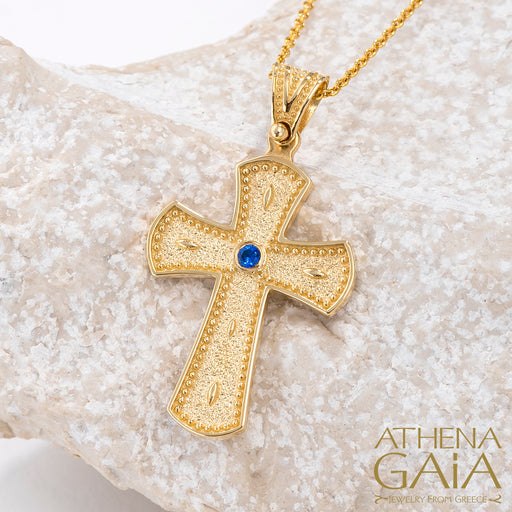
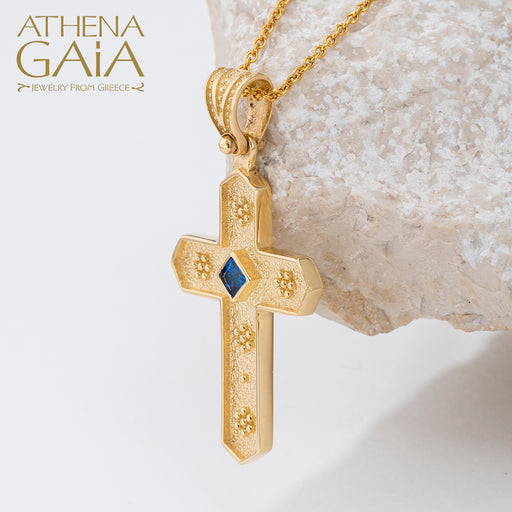
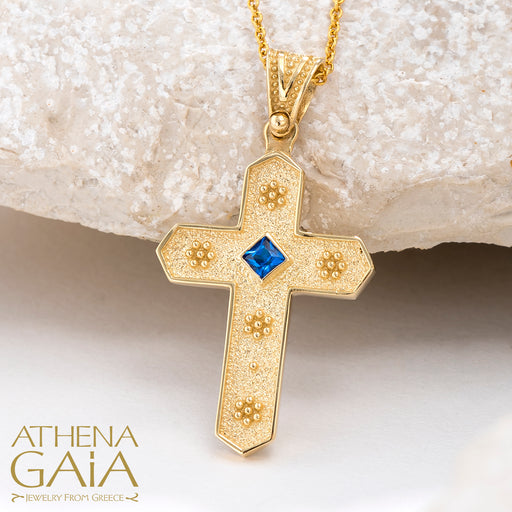
The Byzantine cross is a sacred symbol rooted in the art and theology of the Eastern Roman Empire (330–1453 AD). Distinguished from the simple Latin or Greek cross by its ornate decoration, the Byzantine cross typically features:
- Elaborate filigree and granulation metalwork — hallmarks of Byzantine goldsmithing
- Flared or trefoil arm endings, echoing the architectural motifs of Byzantine basilicas
- Sacred inscriptions such as IC XC NI KA (Jesus Christ Conquers) — a defining mark of Greek Orthodox cross tradition
- Enamel inlays, gemstone settings, and two-tone gold-and-silver combinations
- Iconographic imagery including the Virgin Mary (Theotokos), Christ Pantocrator, and saints
Byzantine Cross Necklaces: Design & Symbolism
Each Byzantine cross necklace in our collection is more than an accessory — it is a wearable icon. The symmetrical, jeweled aesthetic of Byzantine jewelry was designed to reflect the divine light of heaven, making these crosses deeply meaningful for those of Eastern Orthodox faith and for admirers of ancient Hellenic art alike. Whether worn daily as a personal faith statement or displayed as a collector's piece, a gold Byzantine cross commands attention and reverence.
Materials & Craftsmanship
Our Byzantine cross pendants and necklaces are crafted from the finest materials by master jewelers in Greece:
- 18k gold and 14k gold — warm, lustrous, and built to last generations
- 925 sterling silver — classic and versatile, ideal for everyday wear
- Two-tone gold and silver combinations — a signature of authentic Byzantine aesthetic
- Hand-set gemstones and hand-applied enamel where specified
Perfect Gifts for Every Occasion
A Byzantine cross makes a profoundly meaningful gift for:
- Baptisms and Christenings
- Greek Orthodox name days and Easter (Pascha)
- Confirmations and First Communions
- Weddings and anniversaries
- Christmas and milestone birthdays
Each piece arrives ready to gift, reflecting the premium heritage of Athena Gaia's curated Greek jewelry collection.
The History Behind the Byzantine Cross
The Byzantine cross evolved from the early Christian cross symbols of the 4th century, flourishing under Emperor Constantine the Great and the Orthodox Church of Constantinople. As the Eastern Roman Empire expanded its influence across Greece, the Balkans, and the Middle East, Byzantine cross iconography became the dominant visual language of Eastern Orthodox Christianity. Today, the Orthodox cross remains a living symbol — worn by millions as a connection to faith, heritage, and the enduring legacy of Byzantine civilization.
Explore the full story on our History of The Cross page, where we trace the evolution of the cross from ancient symbol to sacred icon.


