








The Gods Behind the Journey
No retelling of the Odyssey is complete without the Olympians. It is Athena who guides Odysseus home, Poseidon who rages against him, Hermes who delivers divine messages, and Zeus who ultimately decides his fate. The gods of Olympus are not distant figures in this story — they are active, passionate, and ever-present. For jewelry that honors the full pantheon behind the epic, explore our Olympian Collection by Kouzoupis — a companion series celebrating the twelve Olympians whose power and will shaped every wave of Odysseus’s voyage.
What You'll Find in This Collection
- Signet rings and pendants referencing Homeric myth and Greek antiquity
- Chains and amulets evoking the Aegean sea and ancient navigation
- Pieces inspired by gods, heroes, and creatures of the Odyssey
- Handcrafted in Greece using traditional goldsmithing techniques
Symbols from the Story: Where Each Piece Appears in Homer's Odyssey
Every symbol in this collection is drawn from a real moment in Homer's poem — not just "ancient Greek" in general, but a specific scene, character, or turning point in Odysseus's ten-year journey home. Here's where each one appears in the text.
What does the trireme represent in the Odyssey?
Odysseus's journey is, first and foremost, a voyage — every twist of the story unfolds aboard ship or on the shores it lands him on, from Poseidon's storms to the final approach to Ithaca. One note for the curious: the three-banked trireme itself came into use a few centuries after Homer's world. His ships were simpler oared galleys, but the trireme has become the lasting emblem of Greek seafaring, and that's the spirit these pieces honor.
What does the swallow symbolize in Homer's Odyssey?
In Book 22, as Odysseus and Telemachus fight for their lives against Penelope's suitors, Athena takes the form of a swallow and perches on a rafter above the hall, watching over the battle and turning the suitors' arrows aside. The swallow is her chosen disguise at the story's most decisive moment — protection arriving in its smallest, quietest form.
How is the horse connected to the Odyssey?
Odysseus's most famous idea predates the poem's main action, but Homer brings it back into the story directly: in Book 8, the bard Demodocus sings the tale of the wooden horse to the Phaeacian court, and Odysseus, hearing his own trick retold, is moved to tears.
Where does the wolf appear in the Odyssey?
When Odysseus's men reach the sorceress Circe's palace in Book 10, they find it ringed with mountain wolves and lions — beasts tamed by her drugs into fawning like hounds instead of attacking. It's one of the eeriest images in the poem, a first sign that nothing on Circe's island is what it appears to be.
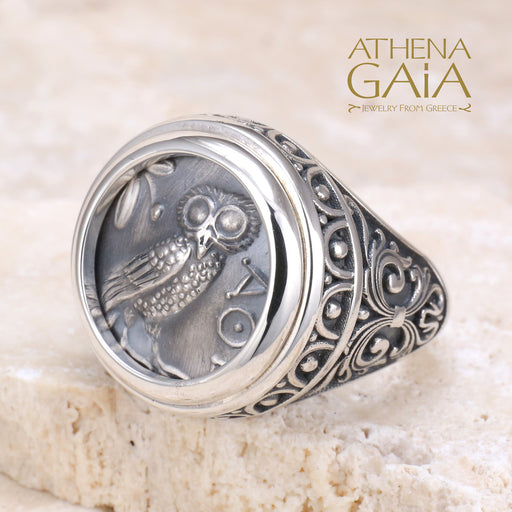
What does the owl represent in the Odyssey?
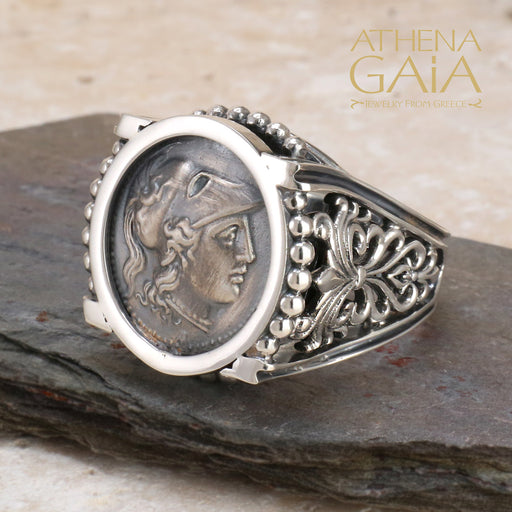
Homer repeats one epithet for Athena more than any other across the poem: "glaukopis," grey-eyed or owl-eyed. As Odysseus's constant guide and protector, she's rarely far from the story — and the owl became her lasting symbol, standing for the wisdom and quiet strategy that gets him home.
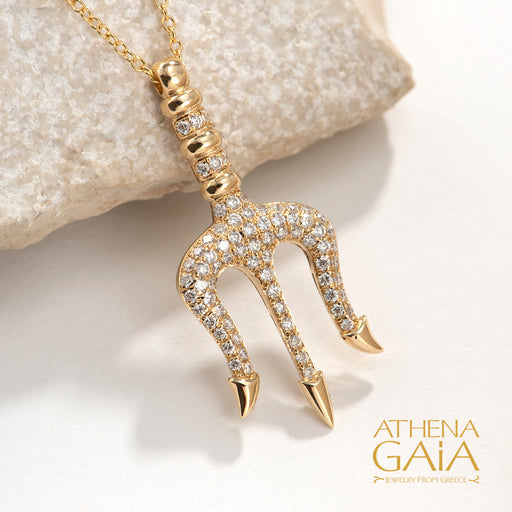
Why is the trident associated with the Odyssey?
Poseidon is Odysseus's great antagonist throughout the poem — furious that Odysseus blinded his son, the Cyclops Polyphemus, he sends the storms that batter Odysseus's ship for years, most dramatically in Book 5. The trident is his signature weapon and the sea's own symbol of power.
What is the significance of the lyre in the Odyssey?
The Odyssey is a poem about storytelling as much as it is about a journey. Phemius sings in Odysseus's own hall in Ithaca, and Demodocus performs for the Phaeacian court in Book 8 — including the story of the Trojan Horse itself. Both accompany themselves on the lyre, making it the instrument of the epic's own voice.
Whether you're drawn to the mythology, the craftsmanship, or the story — wear a piece of the greatest journey ever told.


